

Orthodontic Appliances – Allen, TX
Specialized Devices for Unique Smiles
It can be easy to assume that orthodontic care only includes two treatments: braces and clear aligners. In reality, the team at Hanson Orthodontics of Allen uses a variety of appliances to help our patients achieve a straighter, healthier, and more beautiful smile. Whether that means creating retainers, thumb cribs, expanders, or other appliances, we tailor each patient’s treatment so the end results are gorgeous and the experience of getting them is comfortable. Would you like to learn more about these specialized orthodontic devices for unique smiles? Call our team to schedule a FREE consultation in our office.
Why Choose Hanson Orthodontics of Allen for Orthodontic Appliances?
- Retainers Designed to Keep Teeth in Place
- Palatal Expanders to Promote Proper Development
- Thumb Cribs for Children with Thumb-Sucking Habits
Why Do We Need Orthodontic Appliances?
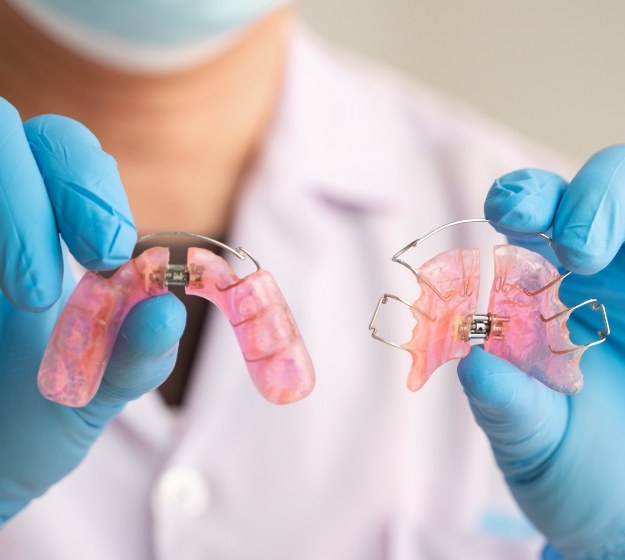
Every orthodontic case is unique. The most common orthodontic gear, such as braces, is not always enough to achieve and maintain the desired results. We use specialized orthodontic appliances in Allen to customize each person’s treatment so they can enjoy optimum oral health and a smile that they are proud of. Whether you need a retainer, a palatal expander, or a thumb crib, we are ready and eager to serve you.
Retainers

Following orthodontic treatment, wearing a retainer is crucial to keeping the recently shifted teeth in their new positions. Without a retainer, the teeth can actually begin to drift back to where they were previously. We offer different types of retainers, including both ones that are fixed onto the teeth and ones that can easily be removed.
Palatal Expanders
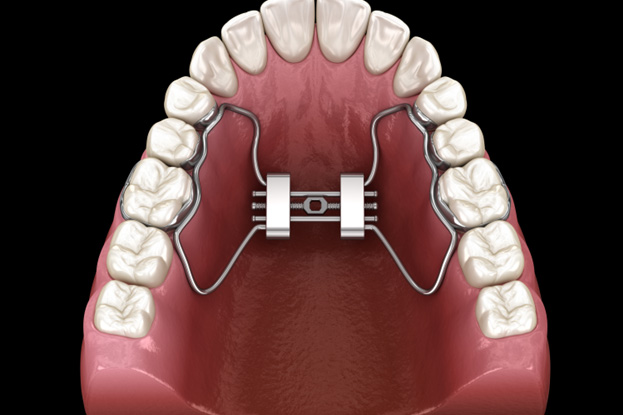
The roof of a child’s mouth, also known as the hard palate, can be so narrow that it prevents the upper teeth from coming in correctly. This can trigger crowding, resulting in higher costs later. With the help of an expander, our doctors can gradually widen the palate and create more room for teeth as well as a broader, more aesthetically pleasing smile.
Learn More About Palatal Expanders
Thumb Crib

Is your child struggling to stop thumb-sucking? This small appliance can help them break the habit more easily. When worn, it prevents them from experiencing the sucking sensation that they would normally take comfort from when placing their thumb in their mouth. It can thereby prevent the orthodontic issues that may arise later due to prolonged thumb-sucking.
Understanding Cost of Orthodontic Appliances
Orthodontic appliances can be a crucial part of your treatment (or that of your child). Of course, each item comes with its own cost, which can depend on the type of appliance, the materials used to make it, and other factors. When you visit us for a consultation, we can talk about specific numbers. Our practice offers flexible payment options, and you can be confident that we want the financial aspect of your care to be as low-stress as possible.