

Adult Orthodontics – Allen, TX
Get a Straighter Smile While Staying Professional
Orthodontics are typically associated with young children, but did you know that roughly 25% of all orthodontic patients in the United States are in fact over 18 years of age? Whether you’re someone in college or multiple decades into their career, you can still choose to straighten teeth and achieve the smile you’ve wanted your entire life. Dr. Hanson has helped many adults solve problems they didn’t think were solvable, especially using subtle treatments that let them keep their current appearance. To learn more about our options for adult orthodontics in Allen, schedule a FREE consultation by giving us a call today.
Why Choose Hanson Orthodontics of Allen for Adult Orthodontics?
- Highly Experienced Orthodontist By Your Side
- Clear Aligners Available
- Clear/Ceramic Braces for More Complex Cases
The Difference Between Adult & Childhood Orthodontics

One of the reasons why orthodontics is recommended for children in most cases is because the bones of the face and jaw are not fully set. This makes them much easier to manipulate with orthodontic treatment. So, if we want to straighten the teeth or realign the bite, you want to start young. Adults have bones that are completely hardened, so while it’s still possible to shift the teeth and bite, the process will take a little longer (particularly for very advanced orthodontic issues). In certain cases, corrective surgery is the only option. Thankfully, Dr. Hanson is typically able to provide exactly what an adult patient needs. Through a gentle, non-invasive approach, she can help you achieve results that last a lifetime.
Our Adult Orthodontic Treatment Options
- Clear aligners: See-through plastic aligner trays are used to shift teeth, allowing patients to discreetly straighten their smile without people around them even noticing they are undergoing treatment. The trays are so thin that they essentially disappear when worn. Additionally, the trays can be removed whenever needed. That means you can eat the foods you want and practice the same oral hygiene routine you’re already used to, something that cannot be said when wearing traditional braces.
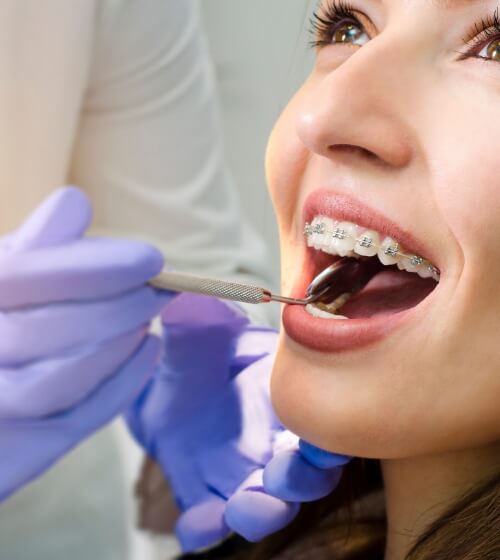
- Clear/Ceramic Braces: Much like traditional braces, clear/ceramic braces use brackets and wires to shift teeth. The main difference is if you saw someone wearing them, you probably wouldn’t even notice. This is because the materials used to create clear/ceramic braces are either transparent or designed to blend in with existing enamel. This makes them far more discreet-looking than metal braces, which are typically silver-colored. The good news is you don’t have to sacrifice effectiveness just to maintain your smile’s appearance.
Adult Orthodontics FAQs

Whether you never had braces, or you had braces as a kid but then your teeth moved out of position, you may have a few questions on your mind about orthodontic treatment as an adult. We’re here to help you find the answers! If you want to talk to our Allen orthodontist directly, you’re more than welcome to give us a call or schedule a consultation. Otherwise, you can read on for the answers to FAQs.
My Teeth Have Been Crooked for Years – Why Get Braces Now?
The truth is that orthodontic treatment is about so much more than just aesthetics! If your teeth are crooked, then they can create crevices that food particles, plaque, and other debris can easily get trapped in, increasing your chances of developing serious oral health problems in the process. Additionally, patients with overcrowding often grind or clench their teeth since their bite isn’t even. This can lead to several consequences as well, including premature wear and tear. In short, straightening your teeth has the potential to positively impact the look, health, and function of your smile!
Am I Too Old for Braces?
Since children and teens are the two most popular age groups with braces, many patients assume that there comes a point where they are “too old” for orthodontic treatment. That’s not the case. In fact, there isn’t technically an upper age limit for braces! If you are struggling with crooked, gapped, or otherwise misaligned teeth, you shouldn’t let your age stop you from scheduling a consultation.
Do Braces Take Longer as an Adult?
Since your jaw is still developing and your teeth can be moved more easily when you’re younger, many patients assume that their treatment timeline will be significantly longer as an adult. There are a few reasons that may not be the case. To start, many older patients experience fewer “hiccups” because they understand the importance of implementing a solid oral hygiene regimen and following all of the treatment guidelines (including the dietary restrictions). Furthermore, there are several factors aside from age that play a role in the length of your treatment, including how complex your case of misalignment is.
Does Getting Braces as an Adult Hurt?
Although you can expect to feel some soreness as your teeth move, this definitely shouldn’t stop you from pursuing your dream smile. After all, there are several measures you can take to alleviate your discomfort, starting with sticking to soft foods for the first couple of hours after having your braces adjusted or switching to a new set of aligners. Additionally, you can use a cold compress to provide a temporary numbing sensation or take an OTC pain reliever as directed. Of course, if a sharp bracket or the edge of one of your trays is what’s causing your discomfort, then there’s another option: using dental wax!
Can You Drink Coffee with Braces?
Yes! So, if you enjoy starting your morning with a hot cup or sipping on an iced latte in the afternoon, you don’t have to worry – you won’t have to give it up. You will, however, need to take certain precautions to prevent your teeth from staining, especially if you have clear/ceramic braces. A few examples include using a straw and brushing your teeth about 20 minutes after you’ve finished.
What Can You Not Eat with Braces?
Are you straightening your teeth with clear aligners? If so, you won’t have any dietary restrictions because they are removable! Clear/ceramic braces, on the other hand, do come with a few dietary restrictions. To prevent a bracket or wire from coming loose, we recommend avoiding crunchy and sticky foods (i.e., raw carrots, hard pretzels, tortilla chips). It’s also a good idea to limit your intake of sugary foods and drinks since overindulging can quickly lead to a cavity, which, in turn, can cause treatment plan delays.
Can I Get Braces on Just My Top or Bottom Teeth?
Single-arch treatment is possible, but it isn’t typically recommended because moving just the top or bottom teeth can prevent them from coming together properly. With that said, don’t hesitate to let us know if this is an option you’re interested in exploring! That way, our team at Hanson Orthodontics can keep this in mind while completing your initial exam.
How Can I Reduce the Cost of Braces?
If you have any questions or concerns about the cost of orthodontic treatment, let us know! From there, we can discuss the different financial solutions that are available, starting with our interest-free monthly payment plans. We also work with Aetna, Cigna, and several other popular dental insurance providers, so we can help you maximize your available benefits and minimize your out-of-pocket expenses.
What Happens After You Get Your Braces Off?
Patients often assume that their orthodontic treatment is over once they reach the final set of aligners or have the brackets and wires removed. In reality, there is another important step: the retention phase. This is when we have a custom retainer made so your teeth stay in their perfectly aligned places. We’ll also give you instructions on how often to wear it (usually every night while sleeping).
Important reminder: Orthodontic relapse happens to upwards of 50% of patients. So, if you lose or break your retainer, don’t wait – call us ASAP. We need to begin the process of repairing or replacing it right away.
Can I Chew Gum with Braces?
Chewing gum isn’t recommended, even if you’re straightening your teeth with clear aligners. After all, taking them off too often can cause you to fall off track with your treatment plan and lead to additional fees! So, if you need to freshen your breath, it’s best to reach for a sugar-free mint instead.